 Home
Home Products
 About Us
 Contact Us
Industrial Protective Oil

Introduction
Corrosion of metallic components represents a persistent challenge across industrial manufacturing, storage, and logistics operations. Even during non-operational stages, such as intermediate storage, transportation, or downtime, metal surfaces remain exposed to humidity, oxygen, salts, and residual process contaminants. These factors can initiate corrosion rapidly, leading to surface deterioration, dimensional changes, and loss of functional integrity.
Protective Oil, also referred to as Anti‑Rust Oil or Corrosion Preventive Oil, is specifically formulated to address these conditions. Unlike functional lubricants, whose primary role is to reduce friction and wear during operation, protective oils are intended to preserve metal surfaces by inhibiting corrosion when components are not actively in use. Their application is therefore critical in maintaining product quality throughout the manufacturing and supply chain.
In modern industrial practice, the use of protective oils is not limited to short-term preservation. With extended global supply chains, export packaging requirements, and increased emphasis on surface cleanliness, protective oils have become an integral part of corrosion control strategies. Proper selection and application of these products can significantly reduce rework, scrap rates, and warranty-related costs while ensuring consistent product quality.
Definition and Technical Scope of Protective Oils
A Industrial Protective Oil (Anti‑Rust / Corrosion Preventive Oil) is a specially engineered fluid designed to inhibit corrosion on metallic surfaces by forming a protective layer between the metal substrate and the surrounding environment. The primary objective of this layer is to reduce or eliminate contact between the metal surface and corrosive agents such as moisture, oxygen, and ionic contaminants.
From a formulation standpoint, protective oils typically consist of:
- A base oil, serving as the carrier medium and film-forming component
- Corrosion inhibitors, responsible for active surface protection
- Functional additives, such as film enhancers, water-displacing agents, or solvent carriers
Industrial Protective oils differ from conventional lubricating oils in both composition and performance objectives. While conventional lubricants emphasize load-carrying capacity and friction reduction, protective oils are optimized for surface coverage, adhesion, and corrosion inhibition. Compared to heavy preservation greases or wax coatings, protective oils offer easier application and removal, making them particularly suitable for manufacturing environments where efficiency and cleanliness are important.
The technical scope of Industrial protective oils includes short-, medium-, and long-term protection of ferrous and non-ferrous metals under a range of controlled indoor conditions, as well as limited exposure during transport and storage.
Base Oil Systems Used in Protective Oils
The base oil plays a critical role in determining the physical behavior, film strength, and durability of a protective oil.
Mineral Oil‑Based Systems
Mineral oils are the most commonly used base stocks due to their cost-effectiveness, availability, and compatibility with a wide range of corrosion inhibitors. Their performance can be adjusted through viscosity selection to achieve the desired balance between film thickness and ease of removal.
Synthetic Oil‑Based Systems
Synthetic base oils provide improved thermal stability, oxidation resistance, and consistent performance under variable environmental conditions. These systems are often used when extended protection or controlled film characteristics are required.
Effect of Viscosity
Viscosity influences:
- Film thickness and persistence
- Drain-off behavior after application
- Resistance to mechanical disturbance
Lower-viscosity oils form thin films suitable for handling and packaging, while higher-viscosity oils provide enhanced protection for longer storage periods.
Key Functional Properties of Protective Oils
Corrosion Inhibition Performance
The primary performance requirement of a protective oil is its ability to suppress corrosion reactions on metal surfaces. This is achieved through a combination of physical barrier formation and chemical inhibition. Performance is commonly evaluated using standardized laboratory tests such as humidity chamber exposure, salt spray testing, and water displacement assessments.
Film Formation and Adhesion
Industrial Protective oils must form a continuous, uniform film that adheres effectively to the metal surface. Adequate adhesion ensures stability during handling, vibration, and transport. Film failure or incomplete coverage significantly compromises corrosion protection.

Water Displacement Capability
Moisture is one of the most critical factors accelerating corrosion. High-quality Industrial protective oils are formulated to displace residual water from metal surfaces, particularly after aqueous machining or washing operations. Effective water displacement prevents the formation of localized corrosion sites beneath the protective film.
Compatibility with Metals and Processes
Protective oils must be compatible with:
- Carbon steels and cast irons
- Alloy steels
- Copper alloys and aluminum alloys
In addition, they should not interfere with downstream operations such as painting, coating, or assembly. Controlled removability using standard industrial cleaning processes is therefore an important design criterion.
Safety and Environmental Considerations
Modern protective oil formulations increasingly focus on reduced toxicity, lower odor, and minimized volatile organic compound (VOC) content. These factors contribute to improved workplace safety and regulatory compliance.
Application Methods and Practical Considerations
Industrial Protective oils can be applied using several methods, each influencing film thickness and performance:
- Dipping: Provides complete and uniform coverage; suitable for high-volume production
- Spraying: Allows controlled application and reduced oil consumption
- Brushing or wiping: Used for localized protection or maintenance tasks
- Fogging systems: Effective for internal surfaces and enclosed volumes
Surface cleanliness prior to application is critical. Oils applied over contaminated or wet surfaces may not achieve full protective performance.
Typical Industrial Applications
Protective oils are widely used in:
- Machined components awaiting assembly
- Finished parts prepared for export
- Cast and forged components during storage
- Tooling, dies, and spare parts preservation
Selection of the appropriate formulation depends on the environmental severity and expected protection time.
Selection Guide for Protective Oils
When selecting a Industrial protective oil, the following factors should be evaluated:
- Metal Type
Different metals require specific inhibitor chemistries to ensure compatibility and effectiveness.
- Required Protection Period
Short-term protection favors low-viscosity oils, while extended storage may require thicker films or waxy formulations.
- Environmental Conditions
Humidity, temperature fluctuations, and airborne contaminants significantly influence performance.
- Application and Removal Requirements
The oil should align with available application equipment and cleaning processes.
- Operational Constraints
Worker safety, cleanliness standards, and regulatory compliance must be considered. Avoiding over-specification is essential; using an excessively heavy protective oil for short-term storage may increase costs and complicate removal without added benefit.
Economic and Quality‑Related Benefits
Beyond corrosion prevention, Protective Oils contribute directly to cost control and quality assurance in manufacturing operations. By minimizing rust formation, they significantly reduce scrap rates, rework, and surface restoration costs. Maintaining clean, oxidation‑free surfaces also helps preserve dimensional accuracy and surface finish, which is particularly critical for precision‑machined components.
Additionally, consistent corrosion protection simplifies inventory management and reduces losses during storage and transportation. Fewer damaged parts translate into improved delivery reliability, stronger customer confidence, and lower overall quality‑related expenses across the supply chain. From both economic and operational perspectives, protective oils function as a preventive investment rather than a corrective cost.
Summary
Protective Oils (Anti‑Rust / Corrosion Preventive Oils) play a crucial role in preserving metal surfaces throughout manufacturing, storage, and transportation processes. Their effectiveness depends on a balanced formulation that combines appropriate base oils, corrosion inhibitors, and functional additives. By understanding their properties, application methods, and selection criteria, industrial users can optimize corrosion protection while maintaining efficiency, cleanliness, and cost-effectiveness.
The Industrial protective oil produced by Eriss Kimia Pars is formulated using selected base oils and advanced corrosion‑inhibitor technology to provide excellent corrosion protection under industrial conditions. This oil has been developed to reduce corrosion‑related damage, preserve surface quality, and support efficient storage and transportation of metal parts. By ensuring reliable corrosion protection in manufacturing, warehousing, and export environments, Eriss Kimia Pars protective oil safeguards valuable metal components and helps maintain consistent product quality throughout the supply chain. For more information about the protective oil and other products manufactured by Eriss Kimia Pars, please contact our experts.
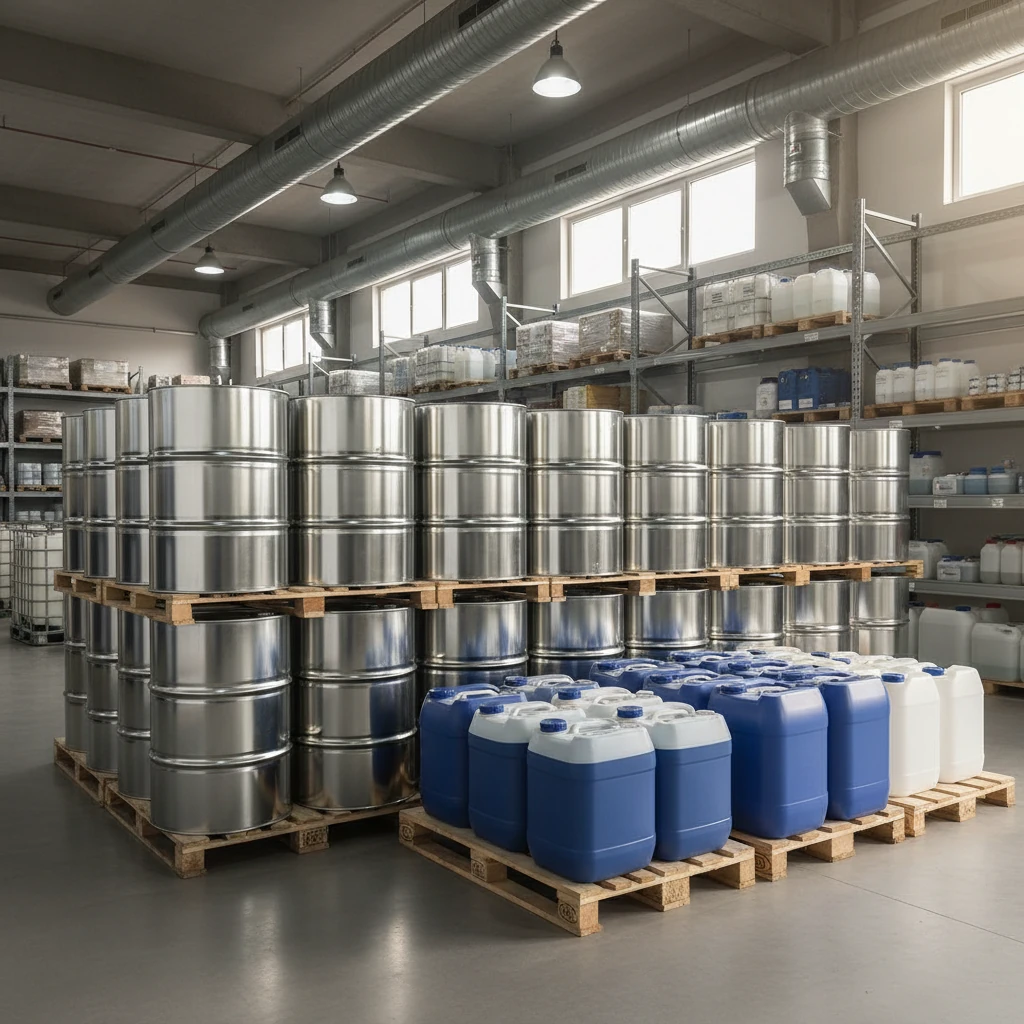
Proper storage of Protective Oil is essential to maintain its physical stability, corrosion‑inhibiting performance, and consistency throughout its intended service life. Observing correct storage practices ensures that the product remains fully effective from production through application, particularly in industrial environments where inventory turnover and long‑term storage are common.
Protective Oil should be stored in its original, tightly sealed containers to prevent contamination, moisture ingress, and oxidation. Containers must be kept in a clean, dry, and well‑ventilated indoor area, away from direct exposure to rain, dust, or aggressive chemical vapors. Storage outdoors is not recommended unless containers are adequately protected against weather and temperature fluctuations.
Recommended Storage Temperature
The ideal storage temperature range for Protective Oil is typically between 10°C and 30°C. Prolonged exposure to elevated temperatures may accelerate oxidation or alter viscosity, while very low temperatures can increase oil thickness or temporarily affect flow characteristics. If the product is exposed to low temperatures during storage, it should be allowed to return to ambient conditions before use to ensure proper handling and uniform application.
Protection Against Moisture and Contamination
Moisture contamination can compromise the corrosion‑preventive properties of the oil. Containers should always be closed immediately after dispensing, and transfer equipment must be clean and dry. The use of dedicated pumps or dispensing systems is recommended to avoid cross‑contamination with other lubricants, solvents, or process fluids. Mixing Protective Oil with incompatible products may reduce its protective performance and should be avoided.
Shelf Life and Stock Rotation
When stored under recommended conditions, Protective Oil typically maintains its performance for an extended period. However, it is good practice to follow a first‑in, first‑out (FIFO) inventory system to ensure product freshness and consistent quality. Containers should be clearly labeled with batch numbers and production dates to support traceability and quality control.
Handling of Opened Containers
Once a container is opened, additional care should be taken to minimize exposure to air and moisture. Opened drums or pails should be resealed properly after use. If long idle periods are expected, nitrogen blanketing or moisture‑control measures may be used in sensitive environments. Any visible signs of contamination, separation, or abnormal appearance should be evaluated before use.
Storage Near Application Areas
Storing Protective Oil near the application point can improve operational efficiency but requires proper housekeeping. Storage areas must be free from excessive heat sources, open flames, and direct sunlight. Although Protective Oil is designed for industrial use, standard safety practices for handling petroleum‑based products should be followed at all times.
Periodic Inspection and Pre‑Use Check
Before application, especially after long storage periods, it is advisable to visually inspect the oil for cleanliness and homogeneity. Gentle agitation may be used if necessary to ensure uniformity. This step helps guarantee consistent film formation and reliable corrosion protection on metal surfaces.
By following these storage recommendations, users can preserve the protective properties of Eriss Kimia Pars Protective Oil, ensuring reliable corrosion prevention, consistent product quality, and efficient performance during manufacturing, storage, and transportation stages. Proper storage is a simple yet critical factor in maximizing the value and reliability of corrosion‑preventive oils in industrial operations.
To maintain the long-term effectiveness of protective oils and prevent performance loss during service, understanding the causes of industrial oil degradation is essential.
Learn how factors such as temperature, contamination, and improper storage can affect oil quality—and discover practical, industry-proven solutions in our detailed guide.
Preventing Industrial Oil Degradation: Causes, Effects, and Practical Solutions