
 Home
Home Products
 About Us
 Contact Us
Introduction
Starting March 31, 2025, the automotive industry will enter a new era—one defined by the official implementation of the new automotive lubricant standard ILSAC GF‑7. This specification is the result of joint development between ILSAC and API, aiming to improve fuel efficiency, reduce emissions, and mitigate low‑speed pre‑ignition (LSPI) in modern turbocharged GDI engines.
In other words, the new automotive lubricant standard ILSAC GF‑7 is the smarter, more efficient evolution of GF‑6, which has been in use since 2020. It introduces stricter requirements in both technical performance and environmental protection.
Key Features
1. LSPI Control
Lubricants formulated under the new automotive lubricant standard ILSAC GF‑7 contain optimized additive packages with balanced magnesium and calcium compounds, reducing LSPI risk by up to 65%. This improvement protects pistons and cylinder walls, enhancing engine reliability.
Learn more about additive formulations and their role in LSPI control under ILSAC GF‑7.
2. Improved Fuel Economy
Field tests show that oils meeting the new automotive lubricant standard ILSAC GF‑7 can reduce fuel consumption by approximately 3%. This is particularly beneficial for hybrid cars and vehicles equipped with start‑stop systems.
3. Thermal Stability and Oxidation Resistance
Through precise formulation, the new automotive lubricant standard ILSAC GF‑7 delivers greater stability at high temperatures, preventing deposit and sludge formation—ensuring cleaner engines and longer component life.
4. Extended Service Life
Lubricants developed under the new automotive lubricant standard ILSAC GF‑7 maintain effective performance for up to 12,000 km without viscosity loss or decreased anti‑wear protection, reducing maintenance costs.
5. Environmental Compliance
The new automotive lubricant standard ILSAC GF‑7 minimizes phosphorus and sulfur content to prevent catalytic converter damage and supports longer‑lasting emission‑control systems.
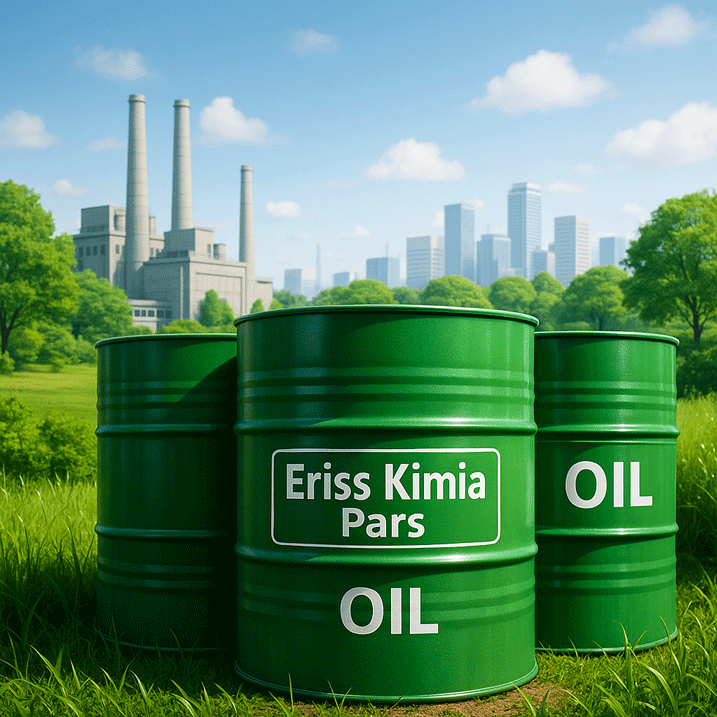
🌿 Looking beyond performance, the new automotive lubricant standard ILSAC GF‑7 also drives the shift toward greener technologies.
To explore how sustainable lubrication is redefining industrial performance, read our feature article:
Technical Testing
To verify compliance with the ILSAC GF‑7 standard, manufacturers must pass several new engine tests:
Sequence IX: LSPI resistance
Sequence VH+: high‑temperature deposit control
Chain Wear Test: timing‑chain protection
Hybrid Compatibility Test: performance under rapid start/stop cycles
Each test confirms full compatibility with the requirements of the new automotive lubricant standard .
Industrial and Global Market Impact
The rollout of the automotive lubricant standard ILSAC GF‑7 has revitalized the lubricant supply chain worldwide.
Major additive suppliers (Lubrizol, Infineum, Afton) have introduced formulations tailored for the new standard. Leading brands such as ExxonMobil, Shell, Valvoline, and Idemitsu announced that production of compliant lubricants would begin in the second half of 2025.
According to Lubes’n’Greases Magazine, the demand for lower‑viscosity grades like 0W‑16 and 0W‑12 is expected to rise following the implementation of the new standard ILSAC GF‑7.
Consumer Benefits
Vehicles using oils that comply with the ILSAC GF‑7 standard experience noticeable advantages:
smoother engine operation
reduced fuel consumption
lower noise and vibration
increased catalytic converter durability
Automakers (Toyota, Honda, Mazda) have confirmed that all 2025 and newer models will be compatible with the new standard ILSAC GF‑7.
Future of Lubrication Technology
Experts at Lubes’n’Greases predict that the new standard ILSAC GF‑7 marks the beginning of an era of intelligent lubrication systems. The next generation—GF‑8, anticipated by 2028—will likely target advanced EV motors and specialized cooling systems.
For now, this standard sets the global direction toward achieving an optimal balance between high performance and environmental sustainability.
Conclusion
With the official activation of the ILSAC GF‑7 standard in March 2025, engine oil evolves from a simple lubricant into an intelligent component of vehicle performance. This advancement increases durability and efficiency while paving the path toward a cleaner, more sustainable automotive future.
no comment