
 Home
Home Products
 About Us
 Contact Us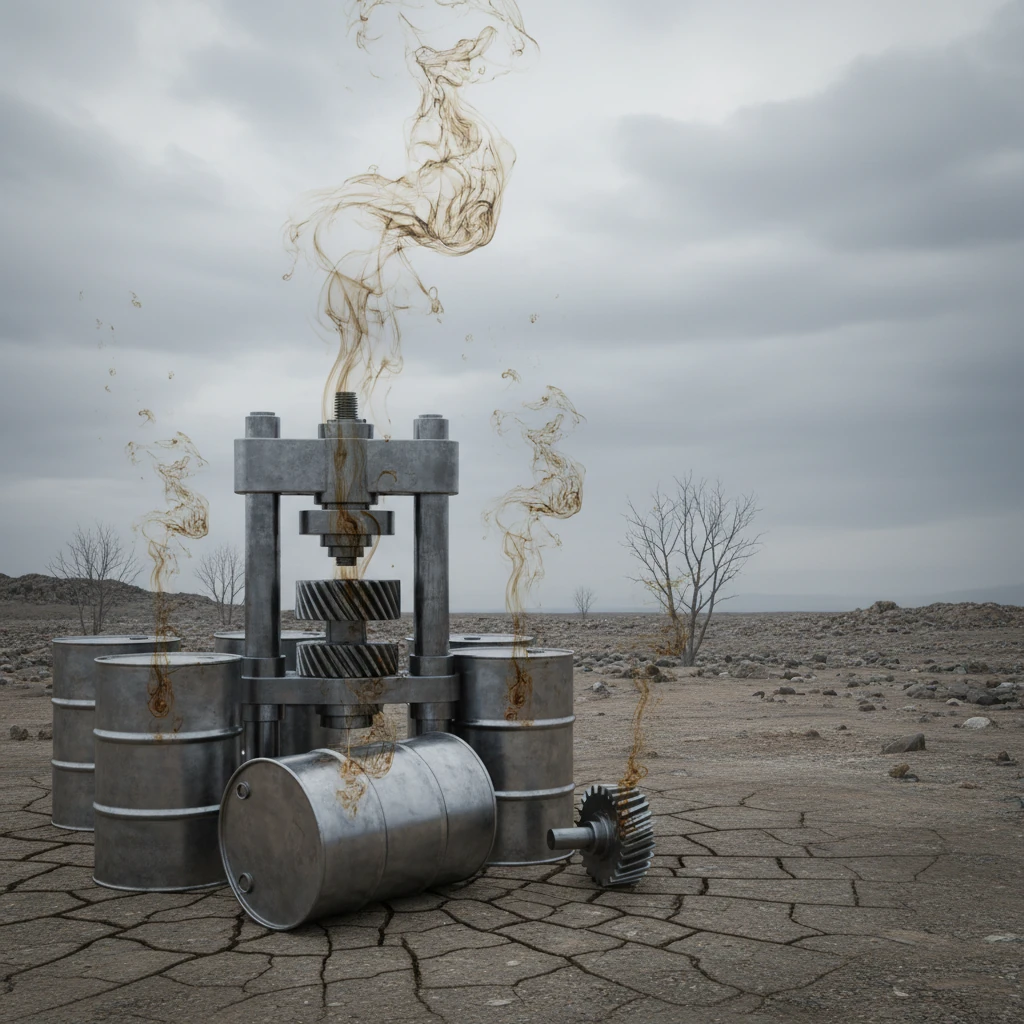
Introduction
The global lubricants market downturn in 2025 marks an unprecedented challenge for the industry. According to the latest September 2025 issue of Lubes’n’Greases, negative growth and a clear decline in revenues signal a genuine recession in the global lubricants market downturn during the first half of the year. Analysts view this as not merely a temporary dip, but the beginning of a deeper transformation in technologies, raw materials, and sustainable development pathways.
Key Causes of the Global Lubricants Market Downturn
Based on Lubes’n’Greases analysis, three core factors have shaped this downturn:
1. Environmental pressures and carbon reduction regulations:
Stricter rules across Europe and North America have forced companies to halt parts of their production or switch toward bio‑based lubricants. This transformation has raised manufacturing costs by nearly 18%, ultimately reducing supply in the global lubricants market downturn.
2. Declining demand from the automotive industry:
Rapid adoption of electric vehicles and the shrinking production of internal combustion engines have directly dropped sales of motor oils—cutting the cash flow of major lubricant producers and intensifying the global lubricants market downturn.
3. Global supply chain disruptions:
Transport restrictions, shortages of chemical additives, and rising prices of Group II and III base oils have added further pressure to producers worldwide.
Impact on International Companies
By mid‑2025, net income among leading brands such as Petronas, Shell, and Fuchs fell by over 10%. This contraction has pushed firms to downsize production and consolidate product lines. Production sites in Asia and Europe now prioritize product optimization and compliance with new standards. Experts at Lubes’n’Greases expect structural changes across the lubricants market downturn to continue through early 2026.
Technology as the Key to Recovery
Innovation is emerging as the strongest defense against the global lubricants market downturn:
Green and biobased lubricants: Produced from natural materials such as rapeseed oil and synthetic esters, they enhance sustainability and revive industrial demand.
Advanced metalworking lubricants: New blends with neutral amines and corrosion inhibitors extend service life and reduce consumption.
Next‑generation HPM greases: Calcium sulfonate complex formulations are replacing lithium greases thanks to superior high‑temperature performance.
Economic and Industrial Consequences
With an annual turnover of over USD 35 billion, the global lubricants market downturn now reflects a real recession. Reduced vehicle and heavy‑machinery production, falling crude oil prices, and higher additive costs have combined to pressure lubricant and additive manufacturers. In Eastern Europe, several development projects have been suspended entirely.
Meanwhile, India and China maintain strong domestic demand, but insufficient supply from Western producers has led to rising import prices. This shift is altering global competitiveness, creating opportunities for local manufacturers to offset part of the global lubricants market downturn.
The decline in machining and metal‑forming operations has significantly reduced consumption of specialty lubricants in this field, including Stretching Oils for Metal Forming, which play a vital role in cold forming and shaping processes.
Recommended Recovery Strategies
According to Lubes’n’Greases, recovery from the global lubricants market downturn requires several fundamental actions:
Investment in recycling and waste reduction technologies.
Localization of raw‑material sourcing to reduce reliance on imports.
R&D expansion in lubricants designed for EV cooling systems and electric drivetrains.
Closer cooperation with metalworking industries through long‑life, low‑consumption lubricants.
A Turn Toward Sustainability
Corporations are now reframing operations around concepts such as carbon neutrality, environmental footprint, and product life cycle. Even in emerging markets, competition within the lubricants market downturn is increasingly based on sustainability compliance rather than price alone.
New initiatives include reducing water usage in metalworking lubricant production, eliminating harmful secondary amines, and developing borate‑free lubricants—clear indicators of the industry’s shift from crude‑dependent processes to clean and renewable technologies.
Environmental and Social Implications
While economic in appearance, the lubricants market downturn has broader impacts. Decreased additive and fuel production has slightly reduced natural resource consumption and greenhouse emissions. At the same time, retraining programs in industrial nations are expanding education in sustainable lubrication engineering.
In developing countries, the supply‑demand gap poses short‑term challenges but also fosters technological self‑reliance in the long run.
To explore how eco‑friendly lubricants are reshaping industrial performance and sustainability goals, read our detailed article Eco‑Friendly Industrial Oils: Role, Benefits, and Future.
Outlook for Late 2025
Data suggest that by late 2025, negative growth rates may ease from −8% to around −3%, with selective recovery in metalworking oils and specialized greases. Companies invested in recycling and bio‑technology segments are gaining traction—signifying that the lubricants market downturn is entering a stabilization phase rather than a full collapse.
Experts from Lubes’n’Greases and STLE forecast a potential rebound by 2026, contingent on authentic sustainability strategies and cross‑regional collaboration.
Conclusion
The global lubricants market downturn in early 2025 represents more than an economic slump—it is the onset of structural change within the industry. Environmental constraints, shifting consumer demand, and technological renewal are collectively redefining production models. If companies strategically align innovation, green investment, and international policy frameworks, the current downturn can evolve into the rebirth of a cleaner, smarter, and more responsible lubricants industry.
no comment