 Home
Home Products
 About Us
 Contact Us
Inner Groove Evaporating Oil
Our best services and products are at your disposal. For more information or to place an order, just click the button below right now and take the first step!
Inner Groove Evaporating Oil
Share This Product:
Product Introduction
What is Grooving in the Context of Machining?
The practice of creating grooves in metal workpieces has a history extending back to the late 19th century, with early applications involving tools resembling drills. This machining method, more established than often realized, remains widely used across diverse industries because of its capacity to enhance the fit between parts. In machining, grooving describes the process of cutting slender channels or recesses in a metal. These channels, while typically narrow, can be made with varying shapes and depths, customized to the specific demands of the manufactured part. Grooving is a key step in preparing pieces for assembly, often providing pathways for seals (such as O-rings) or other similar components. These features become essential for ensuring proper fit and function when two parts are brought together.
Lathes are frequently employed in grooving operations. The process demands precision and careful attention to detail to achieve the desired dimensions of the groove without compromising the integrity of the part.
Metal grooving finds applications in sectors like automotive, aerospace, and general manufacturing. Its advantages include improvements to component performance, adherence to strict specifications, and increased production efficiency.
Achieving optimal grooving results requires careful consideration of factors such as the material being worked, the tools used for cutting, and the specific cutting parameters employed.
Typical Challenges Encountered in Metal Grooving
Several common challenges may arise during grooving operations, which include the following:
Tool Wear: Much like CNC milling and other metal forming processes, grooving leads to the gradual wearing down of the cutting tool. This wear can eventually result in tool failure, with the rate of wear being influenced by factors such as cutting speed, depth of material removed per pass, and the effectiveness of the cooling lubricant.
Chip Management: A further complication in the grooving of metals is the generation of chips and the necessity of their efficient removal. Inadequate chip evacuation can cause the grooving tool to recut the same material, leading to potential interruptions in the grooving process. If left unaddressed, this can escalate the risk of the entire operation being stopped.
How do grinding and grooving differ?
Although both grinding and grooving fall under the umbrella of machining processes, they differ in their fundamental approach and applications. Grinding is a process based on abrasive removal to achieve a desired surface texture or specific dimensional characteristics. Grooving, on the other hand, is a cutting process used to create a channel or recess within a material.
What distinguishes grooving from turning?
Grooving produces a focused, narrow cut into metal, forming a groove or channel. Turning, in contrast, reduces the overall diameter of a workpiece to achieve a final cylindrical form. While grooving can be seen as a specialized form of turning, the tools used in grooving are more specifically designed for creating these narrow features.
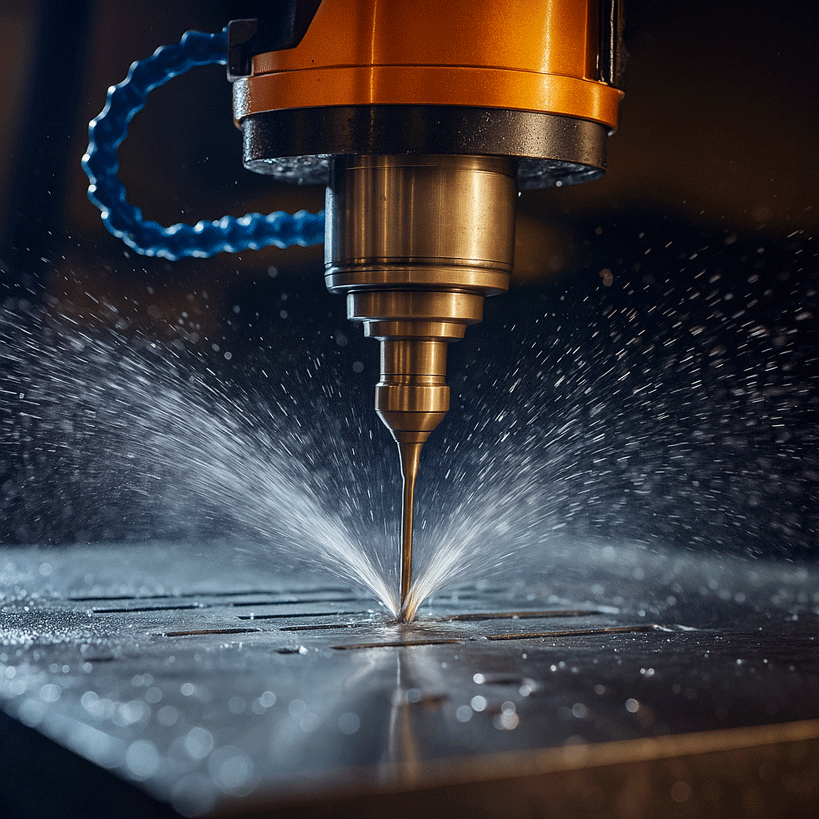
Similar to many other metalworking processes, grooving generates significant heat and friction at the contact point between the tool and the workpiece. Effective lubrication is essential not only for extending the tool’s lifespan but also for ensuring the quality of the final groove, minimizing workpiece deformation, and optimizing process efficiency. The overall goal is to ensure that tools, molds, and other metal-forming components function in a way that maximizes the production of finished parts while minimizing maintenance due to damage caused by heat, wear, and corrosion.
Metal-grooving lubricants are generally classified into four main types:
- Water-based lubricants or soluble oils, which contain emulsions or micro-emulsions. These lubricants provide excellent cooling properties and can be easily cleaned off the workpiece but tend to have weaker lubricity characteristics. They are ideal for high-speed applications and are applied to the grooving area using spray or flow techniques.
- Oil-based lubricants, typically derived from petroleum or mineral oils, are sometimes combined with fats, esters, or additives to enhance performance. These lubricants offer excellent lubricity and long service life but may occasionally face limitations in additive solubility.
- Synthetic and semisynthetic lubricants, which are specifically designed to deliver superior cooling capabilities. Synthetic lubricants can be emulsified with water (sometimes referred to as neo-synthetics) to improve lubricity. These lubricants, often applied through immersion or misting techniques, feature properties such as excellent cooling, variable lubricity depending on the formulation, minimal residue, and greater environmental compatibility.
- Solid (or dry) film lubrication, which involves the use of solid materials, such as graphite or molybdenum, either with or without oil or water. This type of lubrication is best suited for extreme or specialized conditions like low shaft speeds, high and low temperatures, and high pressures.
The key functions of grooving lubricants include:
– Lubrication
– Cooling
– Removal of metal debris
– Corrosion protection
Inner Groove Evaporating Oil by Eriss Kimia Pars is a specialized synthetic lubricant formulated to completely evaporate after use, leaving virtually no residue behind.
Features of Inner Groove Evaporating Oil by Eriss Kimia Pars:
Lubrication:
The key feature of Inner Groove Evaporating Oil by Eriss Kimia Pars is its ability to reduce friction between the cutting tool and the metal. High lubricity minimizes wear on cutting edges and prevents tool and workpiece corrosion, reducing tool wear and improving the quality of the final product.
Thermal Stability and Cooling Capacity:
Another feature of Eriss Kimia Pars’ Inner Groove evaporating oil is its stability at high temperatures without chemical decomposition. Additionally, its strong cooling capacity helps dissipate heat, preventing tool softening or deformation of the workpiece.
Wettability and Penetration:
Good wettability is crucial for groove machining, as the lubricant must fully cover narrow surfaces and gaps between the tool and the groove wall. This feature is built into the formulation of Inner Groove Evaporating Oil by Eriss Kimia Pars.
Corrosion Prevention:
Inner Groove Evaporating Oil by Eriss Kimia Pars is formulated to protect tools and workpieces, especially in aqueous solutions, from oxidation and rust.
Residue-Free Performance:
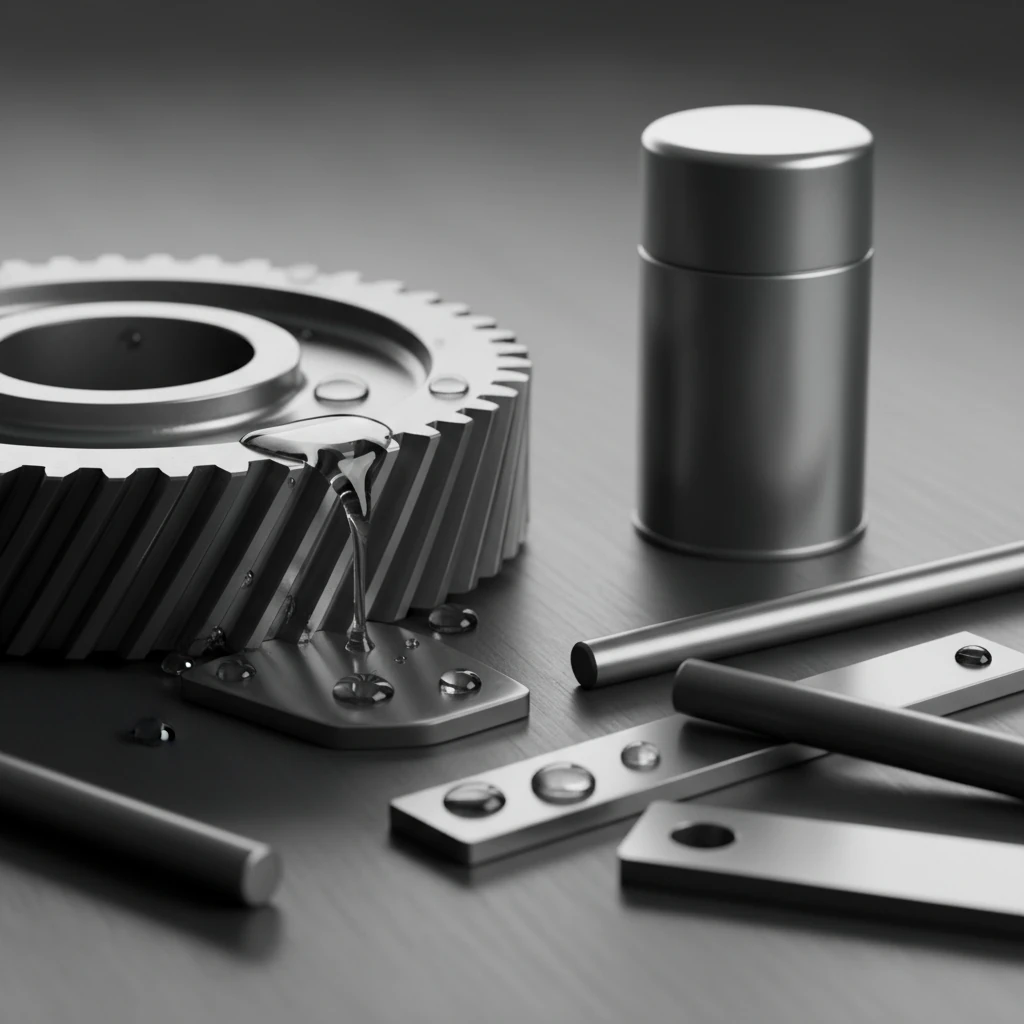
One standout feature of Inner Groove Evaporating Oil by Eriss Kimia Pars is its design to evaporate completely after use, leaving no oily or sticky residue on the workpiece or tools. This eliminates the need for post-machining cleaning processes, reducing time and labor costs. Additional advantages include:
1-Enhanced Process Efficiency
By eliminating cleaning requirements, workpieces can proceed directly to subsequent manufacturing or assembly steps after the Inner Groove process. This reduces downtime and improves production efficiency.
2-Cost-Effectiveness for Certain Applications
Removing cleaning steps reduces costs related to solvents, detergents, and water, while also cutting down on time and energy spent on drying. Lower energy consumption further aids in cost savings.
3-Ideal for High-Precision Work
With no residue left on the workpieces, components remain clean and uncontaminated. This makes Inner Groove Evaporating Oil by Eriss Kimia Pars ideal for operations requiring high precision or spotless surfaces.
4-Reduced Environmental Impact
Since no solvents are required for cleaning, Eriss Kimia Pars’ Inner Groove evaporating oil has a lower environmental impact compared to traditional fluids lacking this feature.
5-Compatibility with Various Materials
Eriss Kimia Pars’ Inner Groove evaporating oil is versatile, effectively usable across industries and on different metals such as aluminum, steel, and non-ferrous materials.
6-Reduced Risk of Product Contamination
Since it leaves no residue, Eriss Kimia Pars’ Inner Groove evaporating oil reduces the risk of contaminating final products or affecting their performance, which is crucial in industries such as electronics or medical equipment.
7-Convenience for Small-Scale Operations
Eriss Kimia Pars’ Inner Groove evaporating oil is particularly beneficial in small-scale or manual operations where cleaning equipment or post-processing facilities are not available.
8-Minimal Waste Disposal Requirements
Since Eriss Kimia Pars’ Inner Groove evaporating oil leaves no residue, the disposal of used oil is minimized, simplifying waste management and reducing associated costs.
Choosing and applying the right lubricants during metal groove machining processes is critical for achieving optimal machining performance. At Eriss Kimia Pars, with years of experience in producing various specialized lubricants and a team of experts, we are ready to manufacture oils tailored to the specific needs of your industries. Contact our experts for free consultation, reliable ordering, and secure purchasing today.
Product Features
- Leaves No Residue After Application, Enabling Direct Progression to Subsequent Processes
- Provides Outstanding Lubrication to Minimize Tool Wear and Ensure High-Quality Grooves
- Maintains Excellent Thermal Stability Even at High Operating Temperatures
- Delivers Superior Cooling Properties, Effectively Managing Process Heat
- Actively Protects Both Tools and Workpieces Against Rust and Corrosion
- Suitable for Use with a Wide Variety of Metals Including Aluminum, Steel, and Non-Ferrous Alloys
- Promotes Environmental Sustainability by Eliminating Cleaning Steps and Reducing Waste
To maintain the integrity and optimum performance of Inner Groove Evaporating Oil by Eriss Kimia Pars, it is essential to adhere to the following storage conditions:
Temperature Control
Store the product in a cool, dry place at temperatures ideally between 5°C and 35°C. Prolonged exposure to temperatures outside this range may affect the physical properties and evaporation behavior of the oil.
Protection from Sunlight
Keep the oil away from direct sunlight and sources of ultraviolet (UV) radiation. Extended exposure to sunlight can degrade the formulation and reduce its effectiveness.
Moisture and Contaminant Avoidance
Ensure containers are tightly sealed when not in use to prevent ingress of moisture, dust, or other environmental contaminants, which can compromise the quality of the lubricant.
Ventilation
Store the oil in a well-ventilated area to minimize the accumulation of vapors, supporting workplace safety and product stability.
Chemical Compatibility
Do not store the lubricating oil near strong oxidizing agents, acids, or corrosive substances, as such chemicals can cause decomposition or hazardous reactions.
Container Material
Use containers made of materials compatible with synthetic lubricants, such as high-density polyethylene (HDPE) or stainless steel. Avoid using containers that may react with the oil or allow permeation of impurities.
Shelf Life
For optimal performance, use the product within 24 months of the manufacturing date under recommended storage conditions. After this period, test the oil before use to ensure suitability.
Warning
Always read the Safety Data Sheet (SDS) before handling the product. Avoid direct contact with skin and eyes, and keep out of reach of children.
Packaging
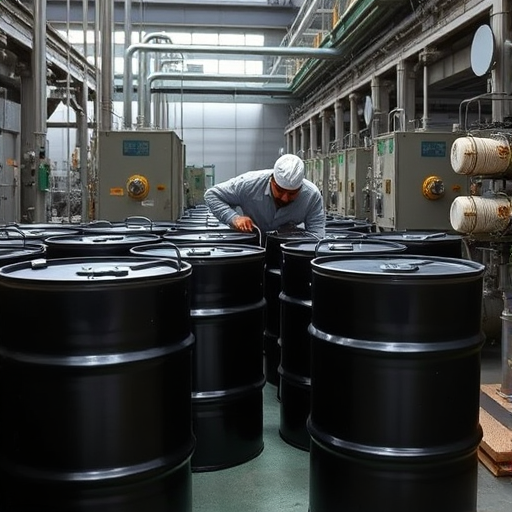
Inner Groove evaporating oils are packaged and supplied in standard 208-liter drums.