 Home
Home Products
 About Us
 Contact Us
plunger industrial oil
Plunger Pump
Plunger pumps are classified as positive displacement pumps. To better understand this type of pump, we first need to become familiar with the concept of a plunger. A plunger is a component that functions similarly to a piston in a piston pump and is used to transfer different fluids. It is also noteworthy that high-pressure plunger pumps are utilized in various industries due to their ability to provide different pressure levels. Plunger pumps are used in applications requiring pressures from 70 to 2070 bar (3,000 to 10,000 psi). Piston pumps, on the other hand, are used for lower-pressure applications. Plunger pumps consist of the following five main components:
Plunger, suction part, discharge part, cylinder, and seal watertight.
Plunger:
The plunger is a rigid component that functions similarly to a piston, but its moving part inside the cylinder is longer. The reciprocating (up-and-down) movement of the plunger inside the cylinder creates the suction and discharge process of the fluid in the pump.
Suction Part (Suction Valve):
Fluid enters the pump chamber (cylinder) through the suction part, which contains a one-way valve that prevents the fluid from flowing back out of the suction chamber.
Discharge Part (Discharge Valve):
This one-way valve prevents the fluid from returning from the pump outlet back into the cylinder and is mainly responsible for discharging the pressurized fluid from the cylinder.
Cylinder:
The cylinder acts as the chamber for the plunger pump and is the part where the fluid is pressurized.
Seal (Watertight):
The seal is used to prevent leakage and fluid loss from the cylinder. In plunger pumps, the seal is attached to the cylinder and fixed in place.
Applications of Plunger Pumps
Plunger pumps are used in applications such as metal and chemical injection, fuel transfer and movement, pressure and hydrostatic testing of various equipment, coal liquefaction processes, urea production, oil and gas industries, municipal and industrial wastewater, waterjet cutting machines, transfer and movement of drilling particles, seawater transfer systems, and reverse osmosis water purification systems.
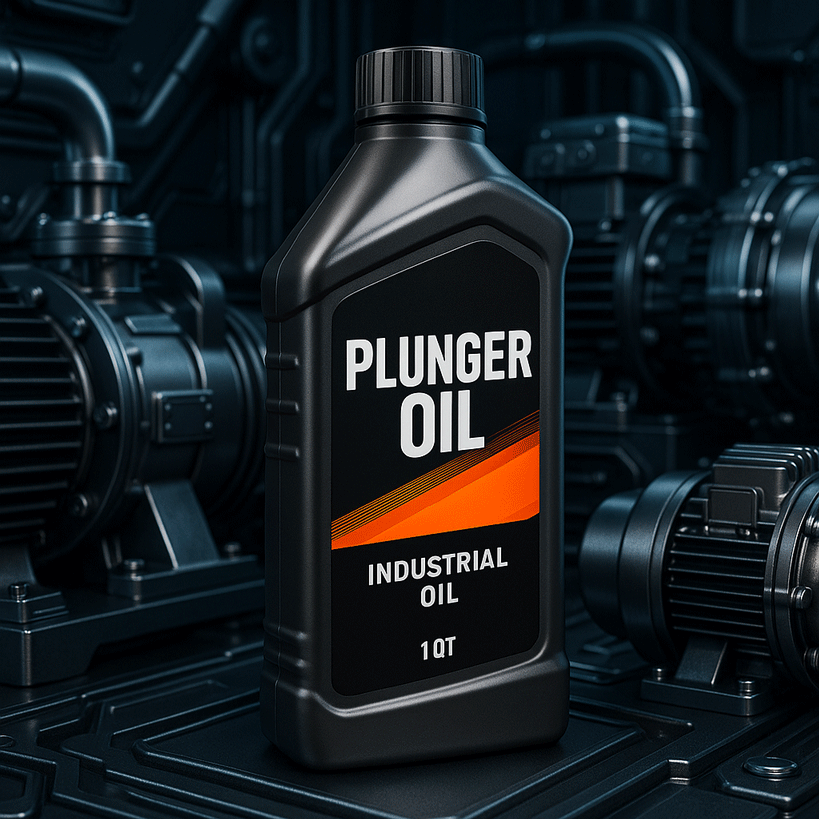
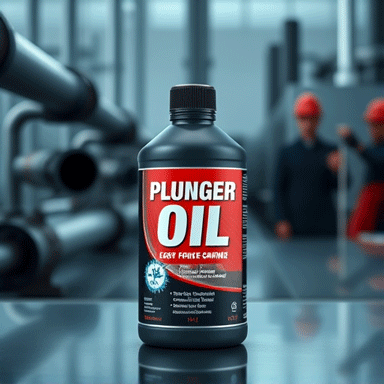
Plunger Oil
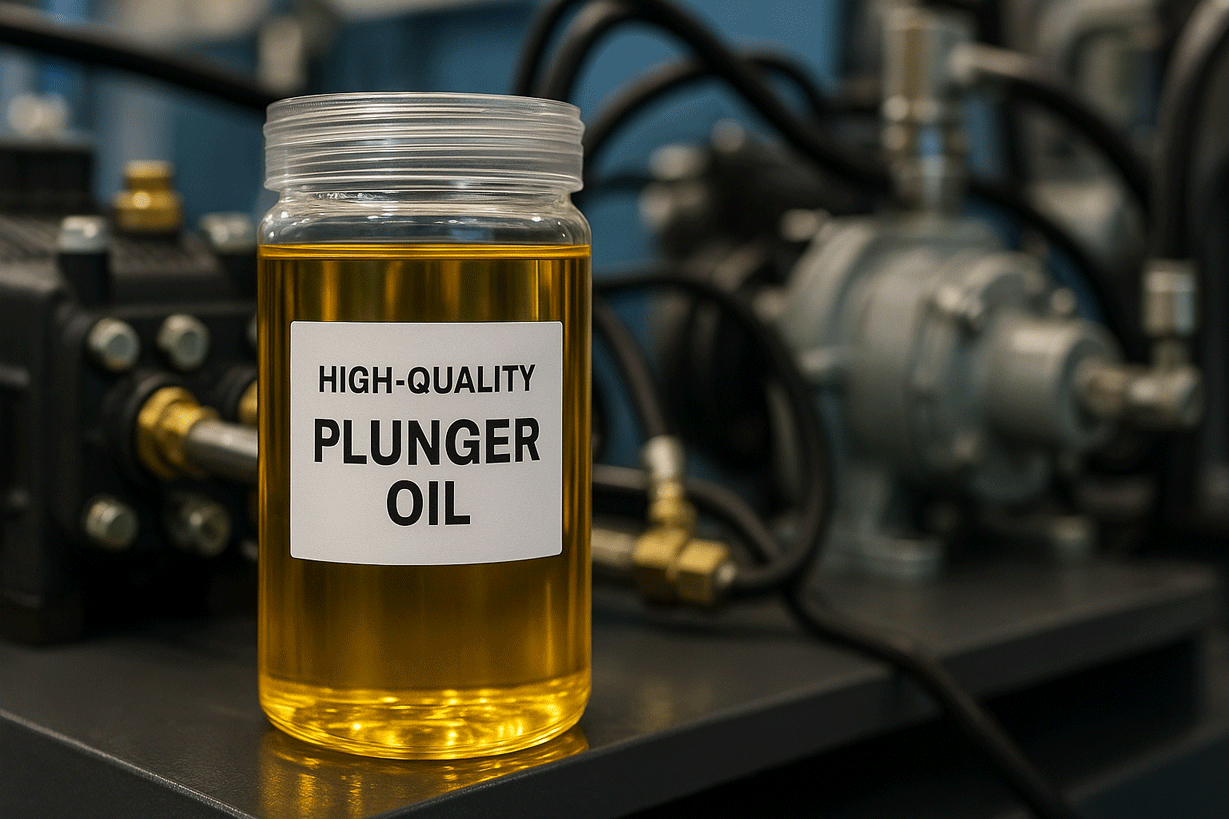
Plunger lubricating oil plays a vital role in ensuring the smooth operation of equipment with plungers, such as reciprocating pumps, hydraulic systems, and compressors. Plungers are key components responsible for transferring fluids or forces in industrial and mechanical systems. These parts are subjected to rigorous motion and high pressure, which may lead to wear, increased heat, and reduced system efficiency unless proper lubrication is applied.
Optimal lubrication of plungers is essential for several reasons. Firstly, this oil reduces friction between the piston and the cylinder wall, minimizing wear and extending the lifespan of both parts. Friction management also ensures continuous movement in reciprocating or linear systems, which is critical for accurate fluid transfer in pumps and maintaining pressure in hydraulic mechanisms.
Lubricating oil also serves as a coolant, dissipating heat generated by constant contact and movement within the system. Overheating can cause deformation, system failure, or safety issues, making oil use crucial for temperature regulation. Furthermore, lubricants create a protective layer that prevents corrosion caused by exposure to acidic fluids, water, or harsh environmental conditions.
Proper lubricating oils can also enhance energy efficiency. By reducing friction, lubricants lower the energy needed for machine operation, optimizing efficiency and reducing operational costs. These oils are generally designed to withstand high loads, pressures, and temperatures, making them extremely effective for heavy-duty applications.
Key Features of Plunger Oil
An ideal plunger oil should have the following features:
– Appropriate Viscosity: The viscosity of plunger oil must be selected according to the type of equipment and operating conditions to ensure sufficient lubrication and prevent friction. The viscosity range for plunger oils is 400–15009 cSt.
– Thermal Stability: The oil must withstand high temperatures and maintain its properties in harsh conditions. The flash point of plunger oil is above 320 °C.
– Oxidation Resistance: Preventing the oxidation of plunger oil helps maintain surface quality. – Environmental Compliance: Plunger oil must comply with environmental standards.
Types of Piston Lubricating Oils
Several types of lubricating oils are used for pistons, each offering different performance characteristics depending on operating conditions, environmental factors, and specific machinery:
1. Mineral Oils:
Derived from crude oil, these oils are enhanced with additives to improve anti-wear, anti- corrosion, and thermal stability properties. Due to their cost-effectiveness and easy availability, they are widely used in standard operating conditions, ideal for applications with relatively controlled temperatures and pressures.
2. Synthetic Oils:
Synthetic lubricants are chemically engineered to provide high performance under harsh conditions. Their high viscosity index ensures consistent lubrication at various temperatures and pressures.
3. Biological Oils:
Industries conscious of environmental impact often opt for bio-based oils made from renewable sources like vegetable oil. These biodegradable lubricants offer excellent lubrication properties and reduce environmental impact, mainly used where sustainability is prioritized, such as in food systems or industries with strict environmental regulations.
4. Specialty Multi-Grade Oils:
Multi-grade oils are designed for optimal performance under a wide range of temperatures, allowing year-round use. These oils are enhanced with viscosity-controlling additives to provide stable performance under common temperature fluctuations in outdoor systems.
Applications of Plunger Lubricating Oils
Plunger lubricating oils are used in a range of industries and applications, including:
– Reciprocating Pumps: In oil and gas extraction, water purification, and industrial processes, plunger pumps heavily rely on lubricating oil for smooth operation and wear reduction.
– Hydraulic Systems: Hydraulic machinery, such as excavators, loaders, and industrial presses, uses plungers to transfer hydraulic fluids under pressure. Lubricants ensure efficiency and prevent leaks or failures under high loads.
– Compressors: In air compressors used in manufacturing, energy production, and other applications, plunger lubrication minimizes friction and optimizes energy efficiency.
– Food Processing: Food-safe lubricants are used in pumps that handle edible liquids. Bio-based oils ensure safety and compliance with health regulations.
Eriss Kimia Pars Company, with years of experience in producing various lubricants, offers high- quality plunger oil manufactured in accordance with international standards and the needs of different industries. When selecting the appropriate plunger oil, one must consider the type of equipment, working conditions, and the manufacturer’s recommendations. With a focus on improving customer industrial operations, our product is formulated to: enhance casting and metal injection capabilities, increase the lifespan of pistons and components (thus reducing production downtime), limit porosity in cast parts, and be cost-effective in use. Furthermore, Eriss Kimia Pars offers systematically formulated lubricants made from quality raw materials that meet the latest regulatory requirements and preserve operator health, safety, and the environment.